
L7 Enterprise Science Platform (L7|ESP®)
The Agentic Operating System for Precision Science.
The operational backbone of precision science.
L7|ESP was built by scientists and engineers who understand that regulated life sciences have demands that generic software was never designed to meet. The platform unifies research, development, manufacturing, and quality into a single connected environment, with the data integrity, workflow orchestration, and AI-actionable foundation that GxP operations require.


Purpose-built on industry 4.0 principles, designed for the agentic AI era.
L7|ESP is developed on the foundational principles of Industry 4.0: connected systems, intelligent automation, real-time data, and seamless integration across scientific and manufacturing operations. These principles established the foundation. The agentic era demands something more, though: a platform where AI agents can operate reliably within regulated environments, grounded in structured, validated, contextually rich data.
L7|ESP is that platform.
Each layer of the architecture builds on the one below it: cloud infrastructure and ontology-driven data models at the base; workflow orchestration and applications in the middle; and business intelligence, AI, and agentic execution at the top.
Business value increases with every level.
L7|ESP platform components.
L7|ESP is a modular platform built for how life sciences organizations actually operate: across teams, functions, systems, and partners. Each component addresses a distinct layer of the architecture, from data and process modeling to agentic AI orchestration, working together as a unified whole.

L7|MASTER®
DATA AND PROCESS MODELING
L7|MASTER is a foundational low code authoring tool used to define scientific data and process models as a single digital standard. It transforms static documents (spreadsheets, paper records, SOPs) into dynamic, executable digital models that can be governed, reused, and understood by both humans and AI systems.
L7|HUB®
CONTENT REPOSITORY
L7|HUB is a centralized repository for portable, standardized scientific content. It operationalizes FAIR data principles (Findability, Accessibility, Interoperability, and Reusability), enabling teams to share, reuse, and govern workflows, data models, and instrument connectors across the organization and across partners.
L7|INTELLIGENCE®
DATA INTELLIGENCE / EXPORT
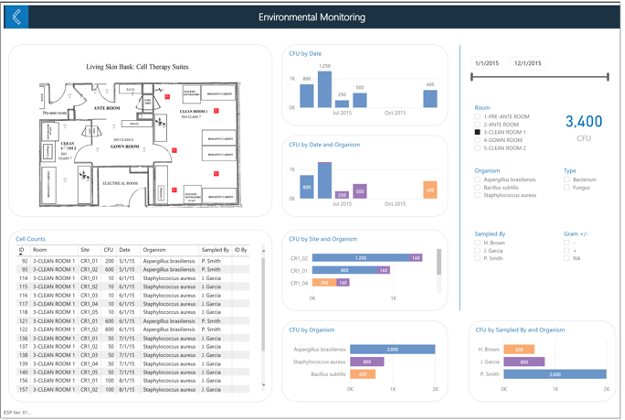
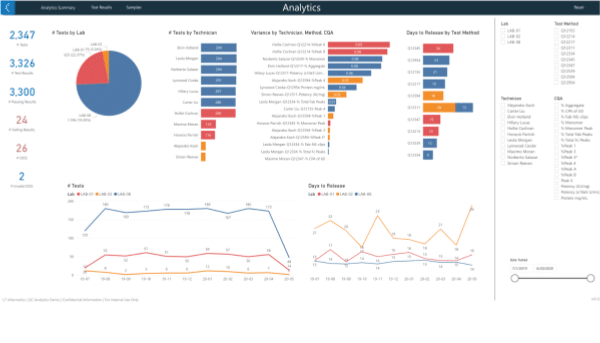
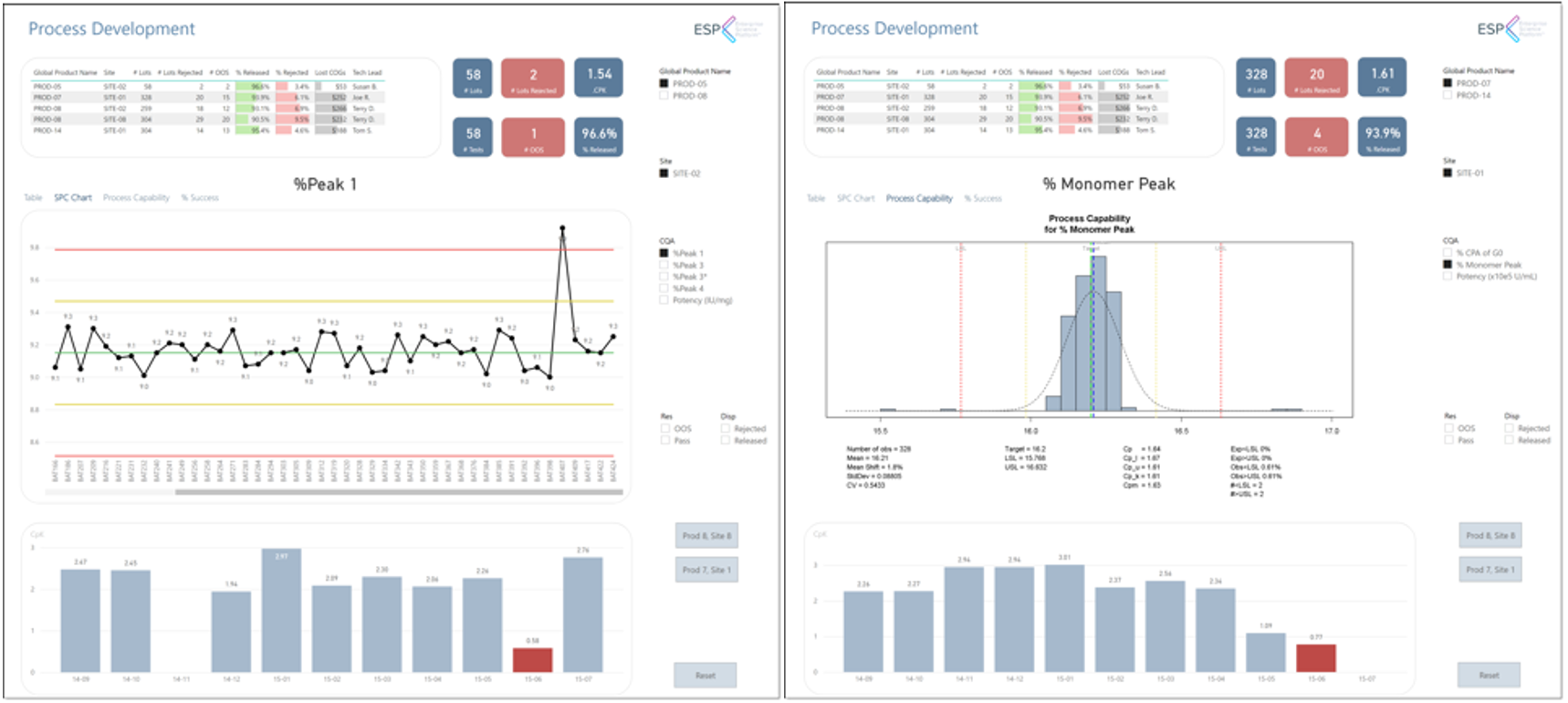
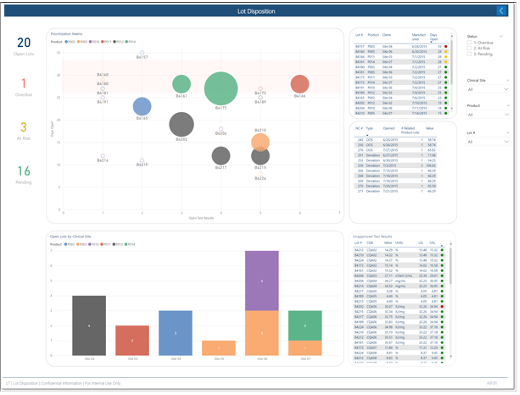
L7|INTELLIGENCE is a strategic business intelligence framework that extracts and structures data captured during process orchestration, transforming it into query-optimized views and data products ready for operational and scientific analysis. Outputs can surface directly in external tools including Snowflake, Tableau, and Power BI, giving cross-functional teams the insights they need without leaving their existing analytics environment.

L7|SYNAPSE™
THE AGENTIC LAYER
L7|SYNAPSE is the agentic reasoning layer built on L7|ESP. It integrates foundation models into the L7|ESP environment as reasoning engines (assembling protocols, suggesting deviation responses, identifying anomalies), while the deterministic harness of L7|ESP ensures that every action that crosses a compliance threshold is validated before execution. The AI reasons. The harness enforces. Neither operates beyond its appropriate domain.
L7|SYNAPSE gives subject matter experts natural language and voice-driven access to the platform, grounded in the organization’s SOPs, governed data, and validated workflows. Responses reflect authorized access, actions are traceable, and autonomy is earned through accountability.
L7|EXCHANGE™
MULTI-PARTY ORCHESTRATION
L7|EXCHANGE enables disconnected organizations and partners to securely coordinate workflows across different legacy systems and applications. It is designed for the complex handoffs between sponsors, CROs, CDMOs, and manufacturing partners that define modern pharmaceutical operations. When the receiving organization onboards a process, it receives not just the data but the relational context that makes the data meaningful.
ESTIMATED RELEASE · 2027

All capabilities, integrated in one platform.
L7|ESP includes a suite of best-of-breed capabilities designed to work together on one single unified platform. Each capability is fully integrated with the platform’s workflow orchestration, data contextualization, and knowledge graph, so data captured in any app is immediately AI-actionable across the whole system. L7|ESP also connects with existing legacy systems, so organizations can adopt individual apps incrementally without replacing what already works.
Secure, collaborative digital notebooks with reusable templates, role-based access, and seamless integration across the platform.
Sample management, experiment execution, and laboratory workflow orchestration in a single connected system.
Electronic batch records, Master Batch Record configuration, and GMP-compliant manufacturing execution for regulated environments.
Resource scheduling and capacity planning synchronized across instruments, staff, and workflows in real time.
Standard content + standard connectors.
L7|ESP ships with a growing library of pre-built standard content (including workflows, data models, and analytics packages) and a wide range of instrument and software connectors covering sequencing, PCR, liquid handling, label printing, quantification, imaging, and more. Pre-built content is governed, versioned, and deployable via L7|HUB, reducing implementation time and accelerating time to value.
A knowledge graph generated at the source.
L7|ESP contextualizes data at the point of execution, capturing not just the raw values but the full set of relationships surrounding them: which instrument was used, which reagent, which personnel, under which protocol, at which site, producing which result, etc… As workflows run, these relationships are stored in a knowledge graph that models complex genealogies among entities (people, equipment, locations, processes, activities, materials, and outcomes).
The knowledge graph creates a semantic layer that allows cross-functional teams to query across departments, trace decisions back to their source, and surface insights that siloed systems cannot produce. It is also what makes data AI-actionable at the source, rather than requiring rounds of downstream cleanup, transformation, and tagging.
Life sciences organizations face a fundamental ontological challenge across the drug lifecycle. Each stage operates on different standards: GO and Cell Ontology in research, ChEBI and BAO in discovery, CDISC and MedDRA in clinical development, ISA-95 and ISA-88 in manufacturing, LOINC and AFO in quality control. L7|ESP standardizes ontological labeling at the point of data capture, using these industry-recognized standards across each relevant lifecycle stages.
Resources.
Dive deeper and see how L7|ESP can transform your operations.
L7|ESP® Platform Brochure
L7|ESP® is the Agentic Operating System for Precision Science, bringing workflow orchestration, data contextualization, scientific applications, and system connectivity into one operating environment. It supports research, development, manufacturing, quality, and diagnostics while preserving the relationships among processes, materials, instruments, people, and results as work is executed. This brochure provides an overview of the L7|ESP architecture,…
DownloadL7|SYNAPSE™ Datasheet
L7|SYNAPSE™ is the agentic AI layer of L7|ESP®, connecting natural-language interaction with governed scientific data, approved documentation, user permissions, and workflow execution. Designed for regulated life sciences environments, it grounds responses in an organization’s own knowledge and operational context. This datasheet provides an introduction to L7|SYNAPSE and its capabilities for retrieving information across L7|ESP, generating…
DownloadOrchestrating the 98%: Why the Operational Harness Will Define Pharma’s Agentic Era
Only 2 percent of a production-grade AI system is decision logic. The other 98 percent is operational infrastructure. In pharmaceutical manufacturing, that infrastructure carries the weight of GxP compliance, audit, and validation. In this white paper, Vasu Rangadass, Ph.D., President and CEO at L7 Informatics, makes the case that AI orchestration, not model sophistication, will…
DownloadThe Agentic Pivot: Why the “Safe Software Choice” Became the Risky One
For two decades, life sciences teams bought point solutions to fix local problems, quietly deepening the fragmentation that now stalls nearly every AI initiative. Vasu Rangadass argues for the agentic pivot: the shift from buying tools to running an operating system for science that takes operations from AI-ready to AI-actionable.
ReadExpertise to ensure success.
When you become a customer, you’ll be granted full access to L7 UNIVERSITY, an incredibly rich library of proprietary content and training resources.

Simon Hughes
L7|ESP is an adaptable and customizable platform that streamlines process execution, provides a complete chain of study from sample to report, and enables management of complex workflows.
Mike O’Mara
The decision to deploy L7|ESP reflects our commitment to staying at the forefront of innovation in this dynamic field.
Dr. Jerome Ritz
We have many computer systems that do not talk to each other with a lot of paper in between each of these different systems. We looked for a system for two years and selected L7 for several advantages.
Ernie Bognar
L7|ESP provides a single platform to assure both control and compliance, while providing a seamless transfer of clinical operations to manufacturing operations.
Dr. Stephen Kingsmore
L7 plays a key role in our end-to-end automation of the patient journey - from order to clinical report.
Magi Richani
L7|ESP revolutionizes how we track plants, samples, and lineages, empowering our R&D endeavors with a consistent process that has already resulted in a 50% increase in efficiency.
Janet Bakeman
We chose L7|ESP as our central data platform as it allowed us to optimize internal data flow, implement FAIR data principles, integrate with the minimal set of four data applications, and accommodate our growing requirements to be more efficient and scalable.